Watching a teenager smile with more confidence, ask fewer questions about mealtime restrictions, and still make it through a football season without a broken bracket sounds like a lot to ask from one orthodontic option. For many families in Cypress weighing clear aligners against traditional braces, the real question is not whether aligners look better. It is whether they can straighten teeth just as reliably as wires and brackets have for decades.
At House of Smiles Pediatric Dentistry & Orthodontics, Dr. Harmon Taylor treats teens who want straighter teeth without visible hardware, and the answer depends less on the technology itself than on the specific bite issue being corrected. Board-certified in orthodontics, Dr. Harmon Taylor evaluates each teen individually before recommending a treatment plan, because aligners and braces are not interchangeable in every case.
What Research Says About Clear Aligner Effectiveness
A 2025 systematic review published in Cureus and indexed on the National Institutes of Health’s PubMed Central database examined clear aligner therapy during interceptive orthodontic treatment in adolescent patients. The review found that clear aligners can support predictable arch expansion and correct certain bite issues, with patient and parent satisfaction rates ranging from 85 to 92 percent across the studies analyzed.
That data lines up with what orthodontists see clinically. Aligners tend to perform well for mild to moderate crowding, spacing issues, and cases that mainly need tipping movements rather than more complex root repositioning. Teens with more involved bite discrepancies may still benefit more from the mechanical control that metal braces provide.
Comparing Aligners and Braces for Common Teen Cases
Braces have a long track record with complex movements. Because brackets and wires stay fixed to the teeth around the clock, orthodontists can apply continuous, precisely directed force. That control matters most for correcting rotated teeth, closing larger gaps, or adjusting how upper and lower teeth meet.
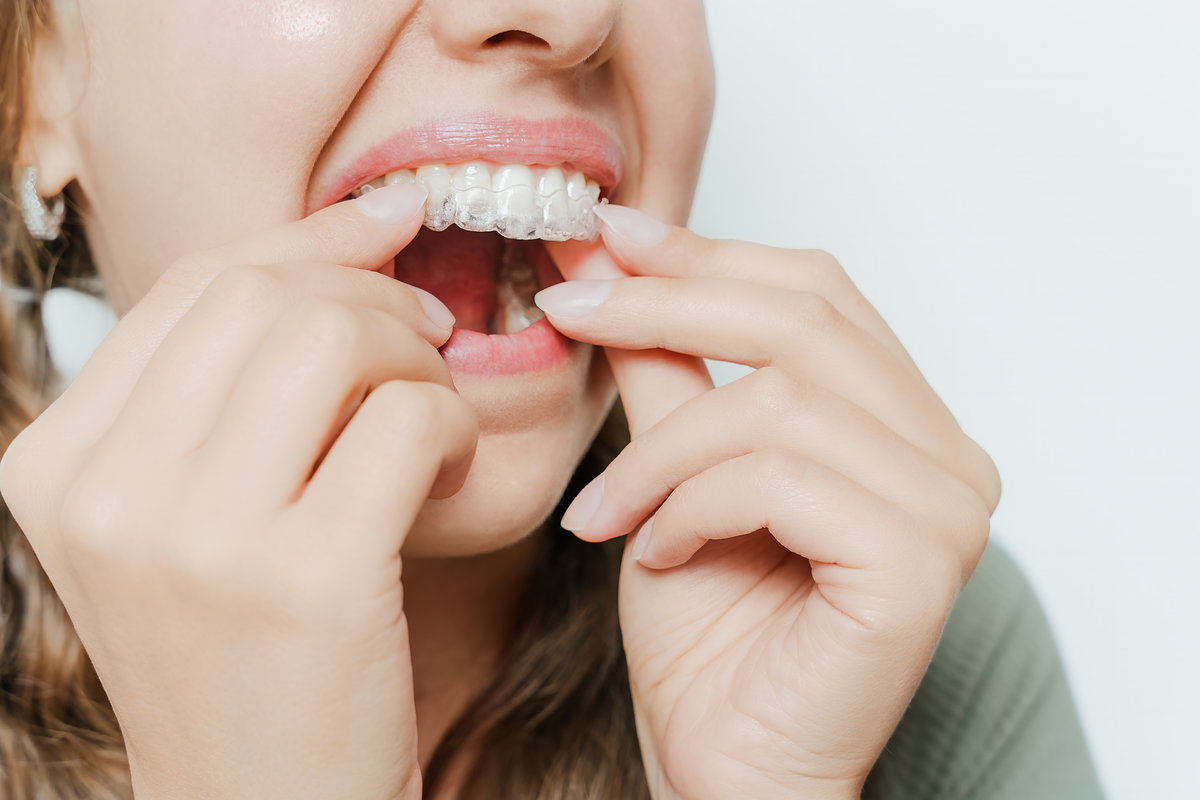
Clear aligners depend heavily on wear time to work as intended. A teen who removes them for a few extra hours each day to eat, play sports, or avoid attention at school may see treatment take longer than expected. This is where family readiness plays as large a role as the technology itself.
Questions Worth Asking Before Choosing
Every teen’s bite, schedule, and personality factor into which option makes sense. The following questions help narrow the decision before the first consultation:
- Does my teen have the discipline to wear aligners 20 to 22 hours a day?
- Is the bite issue primarily crowding and spacing, or does it involve more complex tooth movement?
- How important is appearance during treatment for my teen’s confidence at school or in sports?
These questions do not have universal right answers, but they help frame the conversation with an orthodontist who can evaluate the bite directly.
Lifestyle Factors that Influence the Right Choice
Teens juggle sports, instruments, and social lives that braces sometimes complicate. Aligners can be removed for contact sports and musical instruments that require mouth contact, which some families find practical. Braces, on the other hand, stay in place with no risk of a teen losing a tray or forgetting to bring it home from a friend’s house.
Oral hygiene is another factor. Aligners come out for brushing and flossing, which can make cleaning teeth more straightforward than navigating around brackets and wires. Teens who already struggle with consistent brushing habits may find that either option requires new routines, though the types of routines differ meaningfully between the two.
Cost and insurance coverage may also factor into the decision, and House of Smiles offers free orthodontic consultations to walk families through options without pressure to decide on the spot.
When Early Evaluation Makes a Difference
Some bite issues are easier to address before all permanent teeth have erupted. An orthodontist who evaluates a teen’s bite early may be able to guide jaw growth and tooth eruption patterns in ways that simplify treatment later, whether the eventual plan involves aligners, braces, or a combination approach over time. This is part of why an early orthodontic evaluation remains recommended, even for teens who are not yet ready to start active treatment.
Dr. Harmon Taylor treats children, teens, and adults from the same Cypress office, allowing families to return to a familiar provider as orthodontic needs change with age.
Smile With Confidence at House of Smiles Pediatric Dentistry and Orthodontics
Clear aligners may be just as effective as braces for many teens, particularly those with mild to moderate alignment issues who can commit to consistent wear time. For more complex cases, braces still offer a level of control that aligners cannot always match. Dr. Harmon Taylor’s board certification and experience treating patients across age groups mean every recommendation comes from a direct evaluation rather than a one-size-fits-all approach.
Every teen’s bite is different, and the best way to know which option fits is to consult a dentist who looks at the specific case rather than making general assumptions. Families ready to explore orthodontic options for their teen may schedule a visit to get started.