Most parents are caught off guard the first time someone suggests their seven-year-old should see an orthodontist, but the truth is, some of the most powerful opportunities to protect a child’s smile exist long before their permanent teeth fully come in. A single evaluation at the right moment can change everything, opening a window to guide jaw growth, correct emerging bite issues, and set the foundation for a lifetime of healthy alignment.
At House of Smiles Pediatric Dentistry & Orthodontics, families in Cypress and surrounding communities trust our team to give children the thoughtful, specialized care they deserve. Our board-certified orthodontist, Dr. Harmon Taylor, brings both warmth and clinical precision to every evaluation, and our early orthodontic treatment services are designed to catch problems while they are still easy to address.
What an Early Orthodontic Evaluation Actually Involves
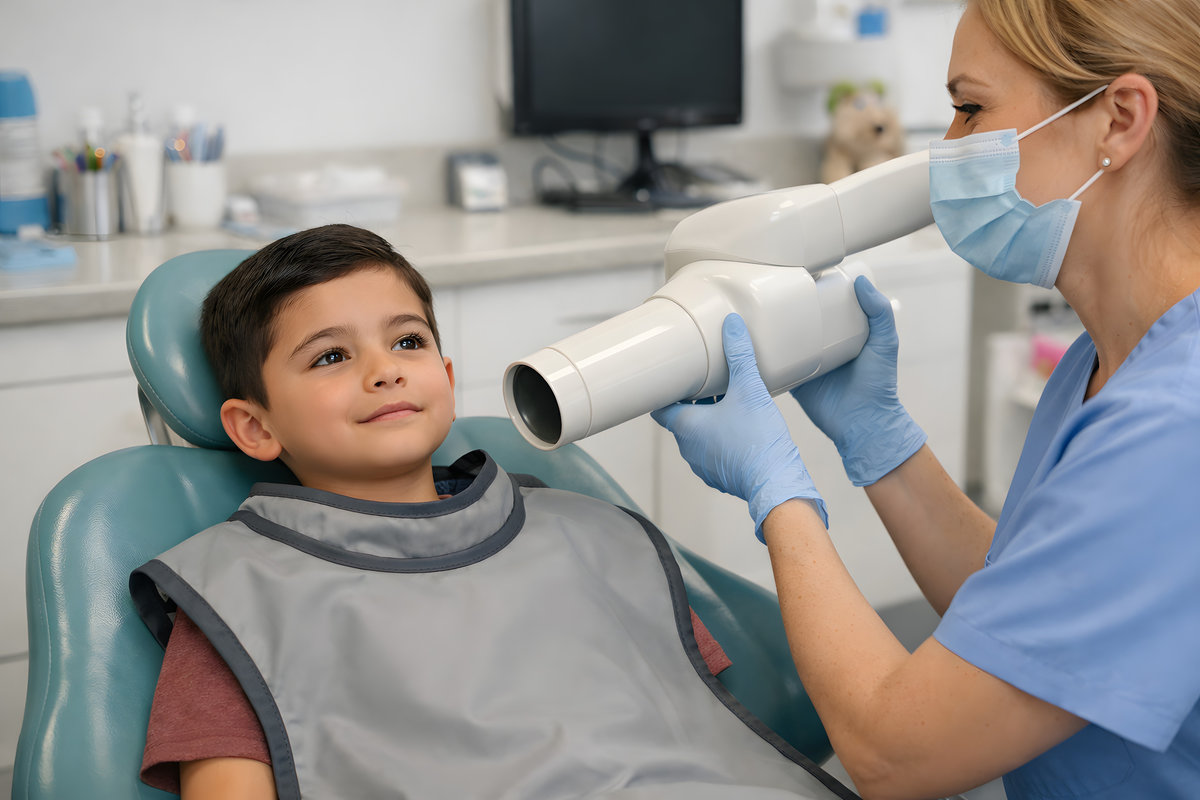
An early orthodontic evaluation is a thorough but relaxed appointment focused on understanding how your child’s teeth, jaw, and bite are developing. Dr. Harmon Taylor examines the alignment of the teeth, the relationship between the upper and lower jaws, the spacing available for incoming permanent teeth, and any patterns that may signal a future concern. In many cases, X-rays are taken to see what is happening beneath the surface of teeth that have not yet erupted. The appointment is conversational by nature, and parents are encouraged to ask questions and share any concerns they have noticed at home.
Records Your Child May Have Taken
Depending on what Dr. Harmon Taylor observes during the exam, the visit may also include a panoramic X-ray to view developing teeth below the gumline, simple photographs of the smile and bite, and impressions or digital scans of the teeth. Not every child needs every record on the first visit. The goal is to gather just enough information to make a confident, individualized recommendation.
What the Orthodontist Is Looking For
Not every child who comes in for an early evaluation will need treatment right away. Many evaluations result in a recommendation to simply monitor growth over time, which is a completely normal outcome. However, some children benefit significantly from intervention before all their permanent teeth arrive, and there are specific signs Dr. Harmon Taylor watches for during the appointment.
Conditions That May Benefit From Early Action
During the evaluation, the issues most likely to prompt a conversation about early treatment include crowding related to jaw size that could worsen over time, crossbites or underbites affecting how the jaws develop, early or delayed loss of baby teeth that may impact spacing, and jaw shifting or asymmetry when biting. The following are common indicators that may warrant a closer look:
- Crossbites or underbites: These can affect jaw development if left unaddressed during growth years
- Crowding patterns: Insufficient jaw space for incoming permanent teeth can worsen without intervention
- Abnormal tooth loss timing: Losing baby teeth too early or too late can disrupt how permanent teeth erupt
- Jaw asymmetry: Shifting or unevenness when biting may signal a developing alignment issue
- Prolonged oral habits: Thumb sucking or similar habits that are actively altering tooth position
Understanding these warning signs early helps determine whether interceptive treatment makes sense now, or whether waiting for comprehensive orthodontic treatment during the teenage years is the better path. If any of these patterns sound familiar, our guide on when your child should first see an orthodontist covers additional signs to watch for at home.
Why Age 7 Is the Recommended Starting Point
The American Association of Orthodontists recommends that all children receive their first orthodontic screening by age 7. At this age, a child typically has enough permanent teeth present for Dr. Harmon Taylor to identify developing concerns while the jaw is still actively growing and most responsive to guidance. Catching issues during this window can prevent the need for more involved treatment down the road, and it gives families the peace of mind of knowing exactly where their child’s development stands.
What Happens If Treatment Is Recommended
If Dr. Harmon Taylor identifies a concern that warrants early treatment, the conversation will cover exactly what that involves and what outcomes families can expect. Options may include a palate expander to encourage proper jaw width, partial braces to address specific alignment concerns, or a space maintainer to hold room for incoming permanent teeth. Each recommendation is tailored to the individual child, and timelines are always explained clearly so families feel confident moving forward. If no treatment is needed right away, the team will schedule periodic monitoring visits to track growth as more permanent teeth continue to come in.
A Few Common Myths About Early Evaluations
Many parents assume an early evaluation automatically means braces are coming, but that is rarely the case. Most children who are seen at age 7 are simply monitored, and only a portion end up needing interceptive treatment before their teenage years. Others worry the visit will be uncomfortable or lengthy, when in reality the appointment is conversational, low-pressure, and typically completed within a single visit.
Schedule an Evaluation at House of Smiles Pediatric Dentistry & Orthodontics
At House of Smiles Pediatric Dentistry & Orthodontics, we have built a practice where children feel genuinely comfortable, and parents feel heard. Dr. Harmon Taylor is board-certified in orthodontics and brings a careful, individualized approach to every child he sees, ensuring families receive honest guidance rooted in what is truly best for their child’s long-term smile health. Our orthodontic consultations are always complimentary, so there is no barrier to getting that first look.
Whether your child is approaching age 7 or you have noticed something that does not seem quite right, now is a great time to take that first step. Contact our office to schedule a consultation and give your child’s smile the head start it deserves.
Frequently Asked Questions About Early Orthodontic Evaluations
Does every child need orthodontic treatment after an early evaluation?
No. Most children who are evaluated around age 7 are simply monitored as their permanent teeth continue to come in, and only some end up needing interceptive treatment before their teenage years.
What is the difference between early treatment and comprehensive treatment?
Early treatment addresses specific developing issues, such as jaw width or spacing, while permanent teeth are still coming in. Comprehensive treatment, such as full braces, typically happens later once most or all permanent teeth have erupted.
Is the early orthodontic evaluation free?
Yes, orthodontic consultations at House of Smiles are always complimentary, so there is no cost barrier to bringing your child in for that first look.
What if my child is older than 7 and has not been evaluated yet?
It is not too late to schedule an evaluation. While age 7 is the recommended starting point, a first evaluation at any age still gives our team useful information about jaw growth and bite development.
How can I tell if my child needs an evaluation before age 7?
Signs like an underbite, crossbite, crowded teeth, jaw shifting when biting down, or prolonged thumb sucking are all reasons to schedule an evaluation sooner rather than waiting for the age 7 milestone.